
Bethel Alaska Property Tax Records
Bethel property tax records are maintained by the City of Bethel, an incorporated second-class city in western Alaska. Because Bethel is incorporated, it levies its own property tax on parcels within city limits, while the surrounding Bethel Census Area has no borough-level tax system. If you need to search Bethel property tax records, your first call is to the city clerk's office. State resources from the Alaska Department of Commerce and the DNR Recorder's Office also support your search for parcel-level information and recorded documents in the Bethel Recording District.
Bethel Property Tax at a Glance
Bethel City Property Tax Authority
Bethel holds the right to levy property taxes because it is an incorporated city under Alaska law. State statute AS 29.45.010 gives municipalities that authority, and Bethel uses it to fund local services. The surrounding Bethel Census Area is part of Alaska's unorganized borough, which means there is no county-level or borough-level property tax for rural properties outside the city boundary. That distinction matters if you are looking up a parcel: only parcels inside the city limits are subject to Bethel's local property tax.
Because Bethel is classified as a second-class city, its tax rate cannot exceed 20 mills under AS 29.45.590. The actual rate is set each year by the city council. If you want to know the current mill rate, contact the city clerk's office directly. The mill rate, combined with your property's assessed value, determines your annual tax bill. All property in Bethel is assessed at full and true value as of January 1 each year, which is the standard the state sets under AS 29.45.110.
The city website was not fully resolving at the time of this research. For the most current contact details and any online tools the city may offer, check directly with city hall or use the state-level resources listed below.
How to Find Bethel Property Tax Records
The main path to Bethel property tax records runs through the City of Bethel City Clerk's office. The clerk maintains official records for all assessed parcels within city limits, including assessment notices, tax bills, and exemption records. Contacting the city clerk by phone or in person is the most direct way to pull up a specific parcel's history. The clerk can tell you the assessed value on file, whether any exemptions are applied, and the current tax status of the account.
For recorded documents tied to a parcel, the Alaska DNR Recorder's Office handles that function through the Bethel Recording District. Deeds, liens, and other instruments are recorded there and can be searched online through the state's recording system. The recorder is separate from the city tax office, but both sets of records are useful when you are researching a Bethel property. Title companies and real estate attorneys routinely pull both sources together for a full picture of a parcel's history.
The Alaska Office of the State Assessor also provides data and resources that apply to Bethel. The state assessor oversees local assessment standards and publishes guidance on valuation methods, exemption programs, and assessment appeal procedures statewide. If you have a question about whether Bethel's assessments follow state standards, that office is a good place to start.
The Alaska Department of Commerce's property tax resource page, shown below, gives an overview of how property tax works across all Alaska cities and boroughs, including incorporated cities like Bethel.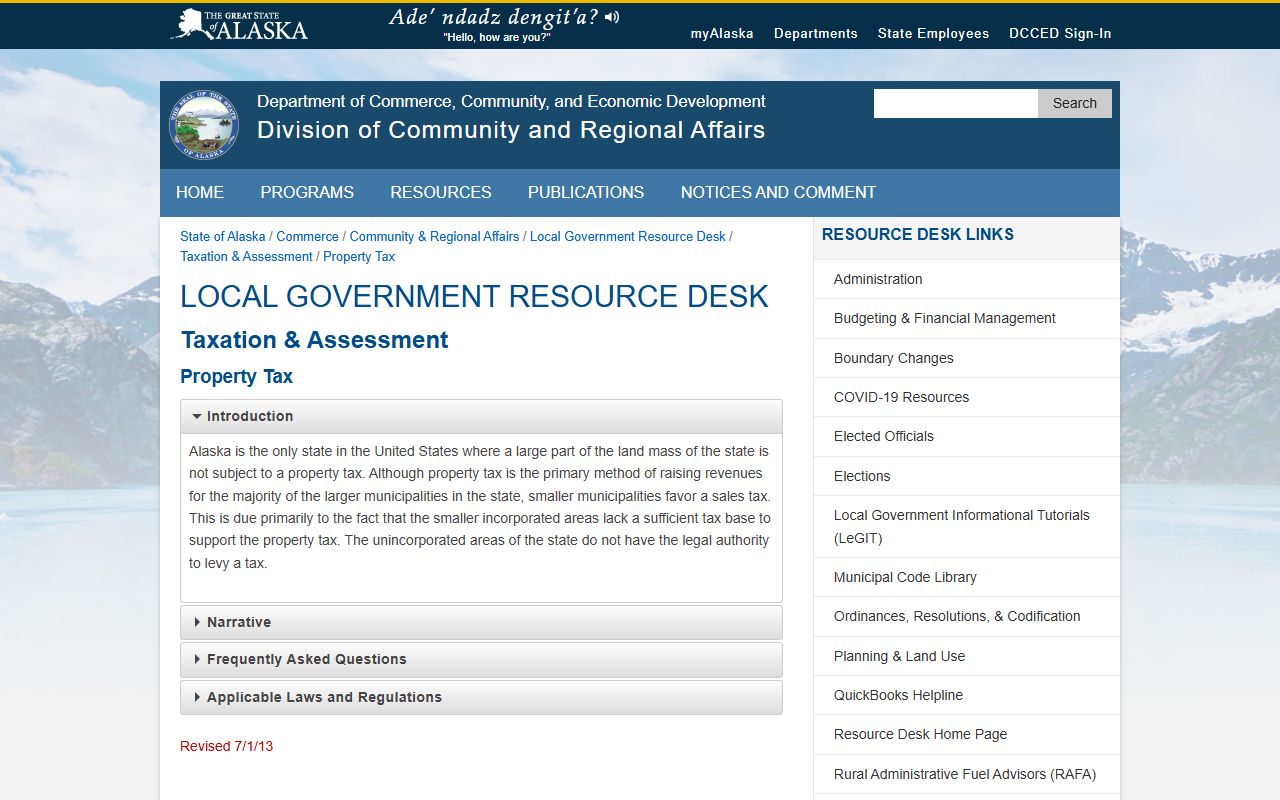
The state overview page is useful for understanding the legal framework that applies to all Alaska property owners, including those in Bethel and the broader Bethel Census Area.
Note: If the city clerk cannot resolve your question, the state assessor's office can clarify which rules apply to second-class cities and point you to the right contact.
Bethel Property Tax Exemptions
Several exemptions reduce the taxable value of qualifying Bethel properties. The most significant is the mandatory senior citizen and disabled veteran exemption required by state law. Under AS 29.45.030, any municipality in Alaska must exempt the first $150,000 of assessed value for residents who are 65 or older or who are disabled veterans with a service-connected disability rating of at least 50 percent. The owner must live in the property as their primary residence. This exemption is not optional for the city. Alaska reimburses municipalities for tax revenue lost to this program, so it does not reduce city funding directly.
Beyond the mandatory exemption, cities can offer optional exemptions under AS 29.45.050. These may include a homestead exemption of up to $75,000 or exemptions on personal property. Whether Bethel has adopted any optional programs is a question for the city clerk. The exemption application deadline and forms are set locally, so timing and paperwork can vary from what you might see in larger Alaska cities.
Business personal property is generally taxable in Bethel as it is across Alaska, though individual declarations and any local exemption limits are set by ordinance. Owners of commercial property should confirm with the city what types of personal property are assessed and what the declaration deadline is each year.
Bethel Assessment Process and Appeals
All taxable property in Bethel is assessed as of January 1 each year. The assessor has the right to inspect any property under AS 29.45.130, and the city is required to value all property at full and true market value. After values are set, assessment notices go out to property owners. You have 30 days from the date of that notice to file an appeal under AS 29.45.190. The appeal goes to the Bethel Board of Equalization. Miss that window and you generally lose the right to challenge the value for that tax year.
An appeal to the Board of Equalization must state the grounds. Common grounds include excessive valuation, unequal valuation compared to similar properties, or an improper classification. You cannot appeal the mill rate itself through this process. The mill rate is set by the city council, and the way to challenge it is at a public budget hearing, not through the board. If the board rules against you, further appeal goes to Superior Court under state law.
Most valuation disputes can be resolved before a formal hearing. Call the city clerk or whoever handles assessments for Bethel and ask how they arrived at your value. If an error exists, they can often issue a corrected notice and restart the appeal clock. That informal step saves time for both the property owner and the board.
Note: Keep a copy of your assessment notice when it arrives. The 30-day appeal deadline runs from the notice date, and the board generally will not waive a missed deadline.
Bethel Recording District and Property Documents
Recorded documents for Bethel parcels are filed in the Bethel Recording District, which is part of the Alaska DNR Recorder's Office system. The DNR Recorder search portal lets you look up deeds, liens, easements, plats, and other instruments tied to a parcel's legal description. The recording system is separate from the city's assessment and tax records, but both are public and available for research.
When you search recorded documents, use the legal description or the grantor and grantee names. Deeds show ownership transfers and are the main source for confirming who holds title to a property. Liens, including tax liens, appear in the recording system once they are formally filed. If a property has unpaid city taxes that have reached lien status, that lien may show up in a recorder search even if it is not visible in a basic tax record lookup.
The state assessor's resource page at commerce.alaska.gov also explains how Alaska's property tax system works and links to relevant forms and guidance documents. That page covers all Alaska municipalities, including incorporated cities like Bethel that manage their own assessment programs.
Bethel Census Area Property Records
Bethel sits in the Bethel Census Area, one of Alaska's unorganized borough areas. Properties outside city limits in this census area are not subject to local property tax because there is no borough government to levy one. However, state resources including the DNR Recorder still serve that region. If you are looking for property records outside the city boundary in the Bethel Census Area, the recording district and state assessor resources are your primary options.
For a broader look at property tax information and resources covering the Bethel Census Area, see the Bethel Census Area property tax records page.