
Property Tax Records in the Chugach Census Area
Property tax records in the Chugach Census Area follow a different structure than most parts of Alaska. This region is part of the unorganized borough, which means there is no local borough government to levy a property tax. If you own land here and need to look up assessment records, deed history, or tax status, you must go through state-level resources. This guide walks you through exactly where to find what you need, including the state assessor's contact list, the Alaska DNR Recorder's Office, and the process for areas like Chenega Bay, Tatitlek, and other communities within this census area.
Chugach Census Area at a Glance
Chugach Census Area Has No Local Property Tax
The Chugach Census Area is part of Alaska's unorganized borough. Under AS 29.45.010, only boroughs and incorporated cities have the legal authority to levy a property tax. Because this census area has no organized borough government, no local property tax is assessed or collected on real property in the unincorporated portions of the area. This is not an oversight. It reflects Alaska's constitutional framework, which dedicates taxing authority to boroughs and cities under Article X of the state constitution.
What this means for property owners is straightforward. If your land sits in the unincorporated parts of the Chugach Census Area and is not within an incorporated city, you will not receive a local property tax bill. You still own your property and must keep your deed and title records current. You may still be subject to state-level taxes in specific situations, such as oil and gas property under AS 43.56. But the standard real property tax that most Alaskans in organized boroughs pay does not apply here.
The Alaska Department of Commerce publishes an overview of all taxing jurisdictions at the state tax jurisdictions contact list. That list confirms which communities and governments in Alaska levy a property tax and which do not. The Chugach Census Area does not appear as a taxing jurisdiction because it has none.
State Property Tax Resources for Chugach Residents
Even without a local property tax, residents and property owners in the Chugach Census Area have access to state-level information about property records and assessment practices. The Alaska Department of Commerce, Community, and Economic Development maintains a detailed overview of how property tax works across the state. That resource is at the property tax overview page of the state's commerce website.
The state overview explains the legal framework, how mill rates are set, what exemptions are available, and how the Full Value Determination process works for education funding. Even if your property is not currently taxed locally, the State Assessor still estimates its full and true value for state reporting purposes under the Alaska Taxable publication. That annual report covers every jurisdiction in the state, including unorganized areas.
The Office of the State Assessor is at 550 West 7th Avenue, Suite 1640, Anchorage, AK 99501. State Assessor Dan Nelson can be reached at (907) 269-4501. That office can confirm your property's status and direct you to any records that exist at the state level.The state tax jurisdictions contact list is the best starting point if you are trying to confirm whether any taxing authority covers your specific parcel. It is updated regularly and shows every assessor and contract assessor operating in Alaska.
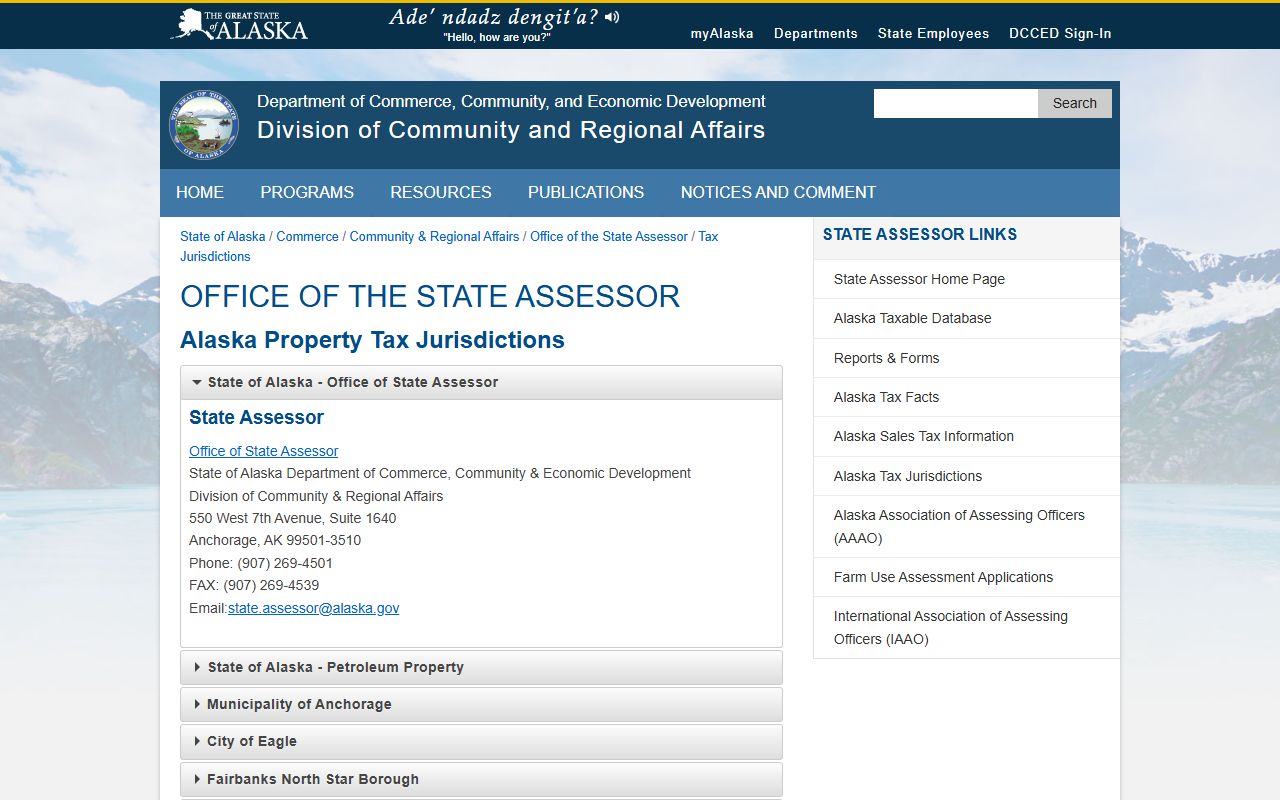
The tax jurisdictions list is where you confirm who, if anyone, handles property assessment for your specific location in the Chugach Census Area.
Note: The state assessor's contact list is updated each year to reflect changes in taxing jurisdictions, including new cities that have incorporated or boroughs that have changed their tax levies.
Understanding Alaska Property Assessment Rules
Alaska requires all property to be assessed at its full and true value as of January 1 each year. That standard is set in AS 29.45.110 and applies to any jurisdiction that does levy a tax. Full and true value means the price the property would bring in an open market sale between a willing buyer and seller who both understand current conditions. In unorganized areas like the Chugach Census Area, the State Assessor uses this same standard when estimating values for statewide reporting, even though no local tax bill results from it.
Assessment records serve purposes beyond tax billing. They feed into school funding formulas under AS 14.17, which requires each district to make a local contribution based on the full and true value of all taxable property. That contribution funds public education. So even in areas without a local tax, the state's valuation of your property affects how education dollars flow in your region. This is worth knowing if you follow local budget decisions or attend school board meetings in communities near the Chugach Census Area.
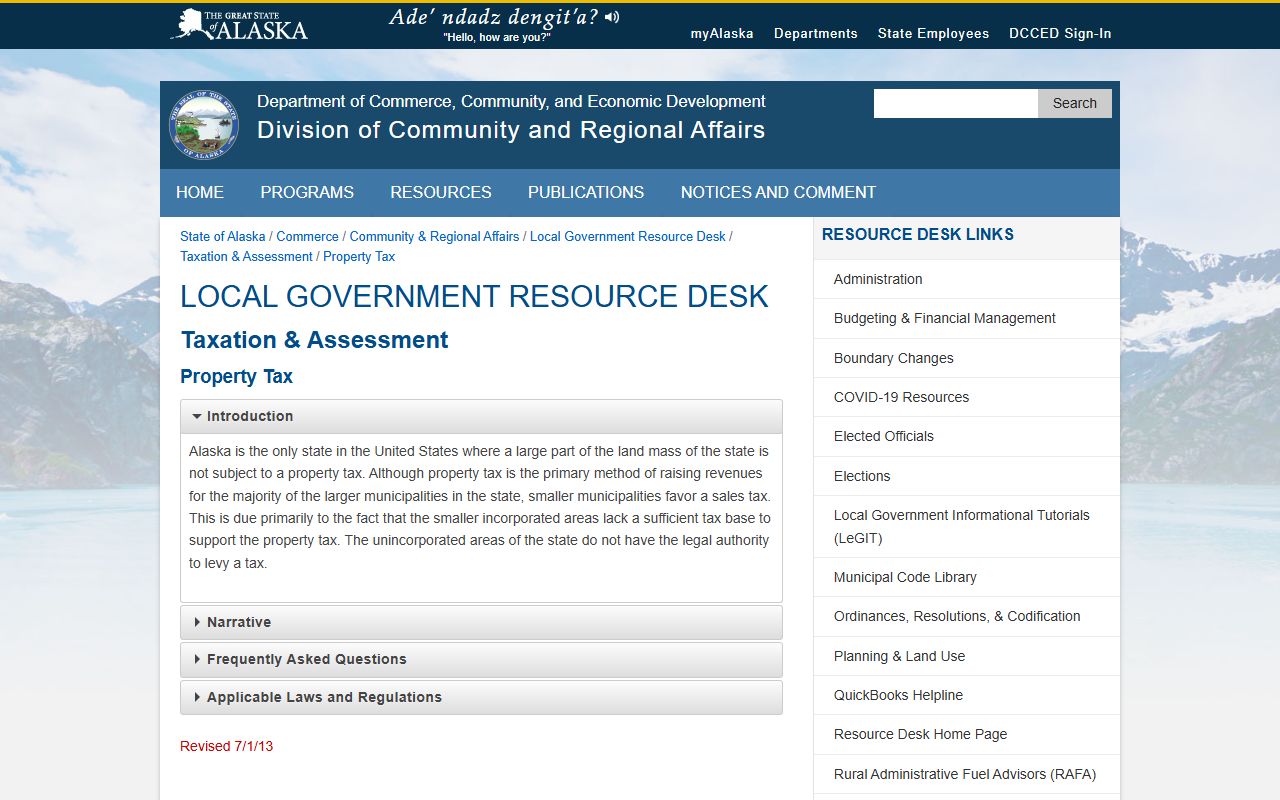
The state property tax overview covers every aspect of assessment, from how mill rates are set to how exemptions reduce your taxable value.
Recording Property Deeds in the Chugach Census Area
For property owners in the Chugach Census Area, the most important records to keep current are your deed and title documents. The Alaska Department of Natural Resources Recorder's Office handles all deed recording across the state. Alaska is divided into 34 recording districts, and the Chugach Census Area falls within one or more of those districts depending on the exact location of the parcel.
The Recorder's Office maintains public records for every instrument that affects real property in Alaska. That includes deeds, mortgages, liens, easements, and plat maps. All of these documents are indexed and available to the public. You can search by name, document number, document type, book and page, or using the Meridian-Township-Range-Section (MTRS) system. Documents recorded since 1970 are available as digital images through the online search portal.
The Anchorage recorder's office, which covers much of Southcentral Alaska including the Chugach region, can be reached at (907) 269-8875. Staff can walk you through using the public terminals or explain how to request certified copies of recorded documents. If your property has ever had a mortgage, lien, or title change, those records are in the Recorder's Office index and are public by law.
Recording a deed promptly after a sale or transfer is essential. Until a deed is recorded, the transfer has no legal effect against third parties. If you inherit property, purchase land, or receive property as a gift in the Chugach Census Area, get the deed recorded right away through the Alaska Recorder's Office.
Note: The DNR Recorder's Office processes roughly 1,000 new documents every day across all 34 recording districts statewide, making it one of the busiest public records offices in Alaska.
Property Tax Exemptions Available in Alaska
Even though the Chugach Census Area does not levy a local property tax, knowing about Alaska's exemption programs matters for several reasons. If your situation changes and you move to a taxing jurisdiction, you want to know what relief is available. Alaska law under AS 29.45.030 requires all taxing jurisdictions to exempt property owned and occupied by residents who are 65 or older as their primary residence. Disabled veterans with a service-connected disability rating of 50% or more also qualify for a mandatory exemption on their primary home.
Optional exemptions under AS 29.45.050 allow municipalities to exempt personal property, inventory held for sale, and up to $75,000 of value on a primary residence. These are adopted by local ordinance, so they vary from one jurisdiction to another. Property owned by Alaska Native Claims Settlement Act (ANCSA) Native corporations is also exempt from local property taxes unless the property is leased or developed for private purposes.
For any exemption questions related to state policy, the Office of the State Assessor is the right place to call. They can confirm what applies in a given jurisdiction and explain the application process. Exemptions for seniors and disabled veterans must generally be applied for by January 15 of the tax year, and late applications may or may not be accepted depending on the local ordinance.
What Chugach Property Tax Records Contain
Property tax records, even in areas without a local tax, typically contain useful information for landowners and prospective buyers. When a taxing jurisdiction does assess property, those records include the assessed value, property description, owner name and address, exemption status, and tax payment history. For parcels in the Chugach Census Area that fall within an incorporated city, the local assessing office would maintain those records. For unincorporated land, the State Assessor may have Full Value Determination estimates on file.
The assessment roll is a public document under AS 29.45.160. Any person may request access to it. In boroughs with online portals, you can pull up a parcel record in minutes. In areas without such tools, a written or phone request to the local assessing office or the State Assessor's office will get you the data you need. For the Chugach Census Area specifically, the relevant records will most likely come from the DNR Recorder's Office for deed and title history and from the State Assessor for any valuation estimates.
If you are buying or selling property in the Chugach Census Area, a title search through the DNR Recorder's Office index is essential. It will show you all recorded instruments affecting the property, including any liens or encumbrances that could affect the transfer.
Note: Assessment records and title records are two different things. The assessor tracks value and tax status. The Recorder's Office tracks legal ownership and encumbrances. You may need both when researching a parcel.
Nearby Alaska Boroughs and Census Areas
The Chugach Census Area borders several other Alaska regions. If your property is near one of these areas, their records offices may also be relevant to your search.