
Hoonah-Angoon Census Area Property Tax Records
The Hoonah-Angoon Census Area is an unorganized area of Southeast Alaska with no borough government, which means property tax records here work very differently than in organized boroughs. This page explains what that means for property owners and how to access the state and recording resources that apply to this area.
Hoonah-Angoon at a Glance
Property Tax Records in an Unorganized Area
The Hoonah-Angoon Census Area is what Alaska calls an unorganized borough. It is a statistical area used by the U.S. Census Bureau, not a local government. There is no borough assembly, no borough assessor, and no local ordinance authority to levy a property tax. Under AS 29.45.010, only municipalities such as organized boroughs and certain cities have the legal authority to tax property. The unincorporated areas of Alaska, including most of the Hoonah-Angoon Census Area, do not have that authority.
This is not unusual in Alaska. A large portion of the state's land mass falls within unorganized census areas with no borough government. The state of Alaska recognizes this structure, and state law explicitly limits property tax authority to organized local governments. If you own land in the unincorporated parts of the Hoonah-Angoon Census Area, you do not owe a borough property tax to any local jurisdiction. There is simply no entity with the legal power to impose one.
That said, property records still exist. Ownership information, deed transfers, plat maps, liens, and mortgages are all recorded through the state recording system. Assessment data also exists at the state level, because the Office of the State Assessor estimates Full Value Determinations for every area of Alaska, including unorganized ones, to support school funding calculations. Those figures are used to determine how much the area contributes to the statewide education formula under AS 14.17, even without a local tax.
If you are looking for property tax records from a city within the census area that does levy a tax, the city's own office handles those records. The cities of Hoonah and Angoon are the primary communities in this census area. Both are small second class cities. Whether they levy a local property tax depends on their current ordinances. Contact them directly or use the state directory to check their current tax status.
State Resources for Hoonah-Angoon Property Records
Because there is no borough assessor for the unincorporated portions of this census area, the Alaska state government is the primary resource for anyone researching property in Hoonah-Angoon. The Alaska Department of Commerce, Community, and Economic Development maintains a comprehensive property tax resource desk that explains the legal framework, which areas can levy property taxes, and what rights property owners have.
The Tax Jurisdictions Contact List from the Office of the State Assessor is a good place to check whether any city in this census area currently levies a property tax. That directory shows every taxing jurisdiction in Alaska, the name and contact details for each assessor, and which jurisdictions are actively collecting property taxes. If you need to confirm whether a specific city in the Hoonah-Angoon area is taxing property, the directory will tell you.
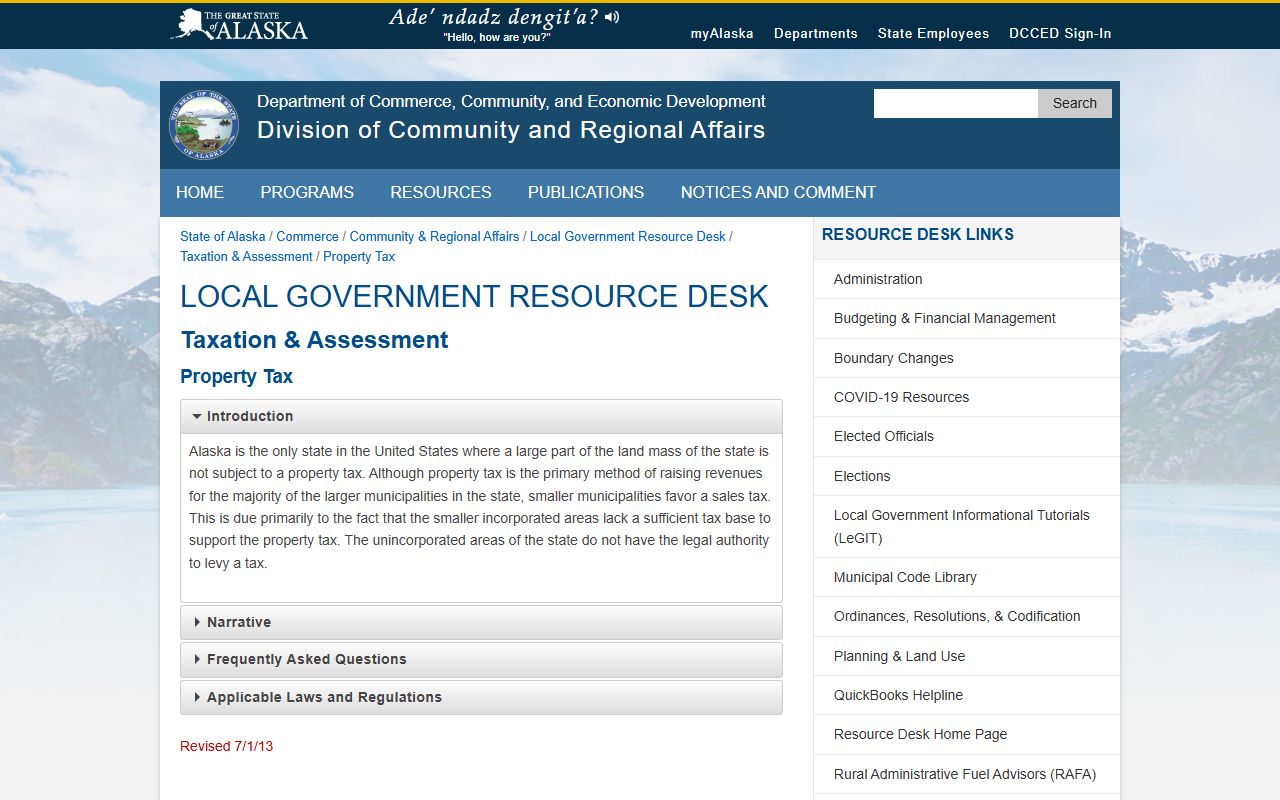
The Alaska property tax overview explains how taxing authority is structured across the state and specifically addresses the situation for unincorporated areas.
Note: Fourteen of Alaska's eighteen organized boroughs levy a property tax. Only eleven cities outside of organized boroughs do so. Areas like the Hoonah-Angoon Census Area that lack borough organization cannot levy a property tax under state law.Finding Taxing Jurisdictions Near Hoonah-Angoon
If you are researching property tax because you are buying or selling land in the Hoonah-Angoon area, the state directory is your best starting point. The Directory of Taxing Jurisdictions lists all 25 municipalities in Alaska that currently levy a property tax. You can scan the directory to see if a city in this area appears on the list. If it does, you will find the assessor's name, address, and phone number there. If it does not appear, no local property tax is being collected in that jurisdiction at this time.
The state assessor's office can also answer general questions about how Alaska property tax law applies to any given area. State Assessor Dan Nelson is based in Anchorage and can be reached at (907) 269-4501. His office at 550 West 7th Avenue, Suite 1640, handles oversight of all assessors across Alaska, including contract assessors and small city assessing offices.
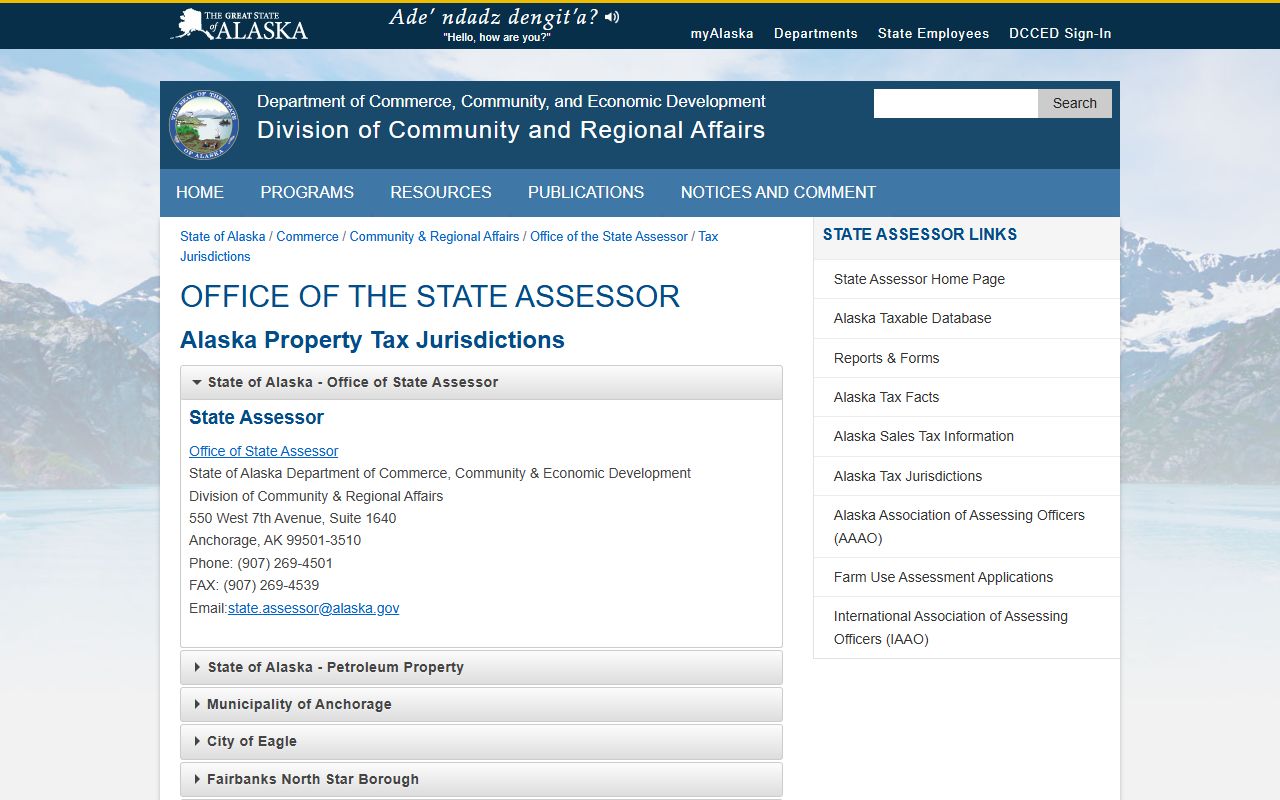
The state tax jurisdiction directory is updated regularly and is the most reliable source for finding which local governments are actively assessing and collecting property taxes across Alaska.
Property Records Through the Alaska Recorder's Office
Even without a local property tax, property ownership records for land in the Hoonah-Angoon Census Area are recorded through the Alaska state system. The Alaska Department of Natural Resources Recorder's Office processes and archives all deed transfers, mortgages, liens, easements, and plat maps for this part of Southeast Alaska. The state uses a recording district system, and Hoonah-Angoon falls within a Southeast Alaska district.
You can search for Hoonah-Angoon-area property records using the Recorder's Office online search portal. The portal supports searches by owner name, document type, date range, document number, and geographic identifiers like the Meridian-Township-Range-Section system. Digital images of documents recorded since 1970 are available directly through the portal. Older records are in historic books held at recorder's offices in Anchorage and Fairbanks.
For anyone buying land in the Hoonah-Angoon area, a title search through the recorder's portal is an important step. It shows whether any liens, unpaid judgments, or encumbrances are attached to the property. The recorder's office does not provide title insurance or legal advice, but the public records it maintains are the foundation of any title search. If you have questions, recorder staff at the Anchorage office can be reached at (907) 269-8875.
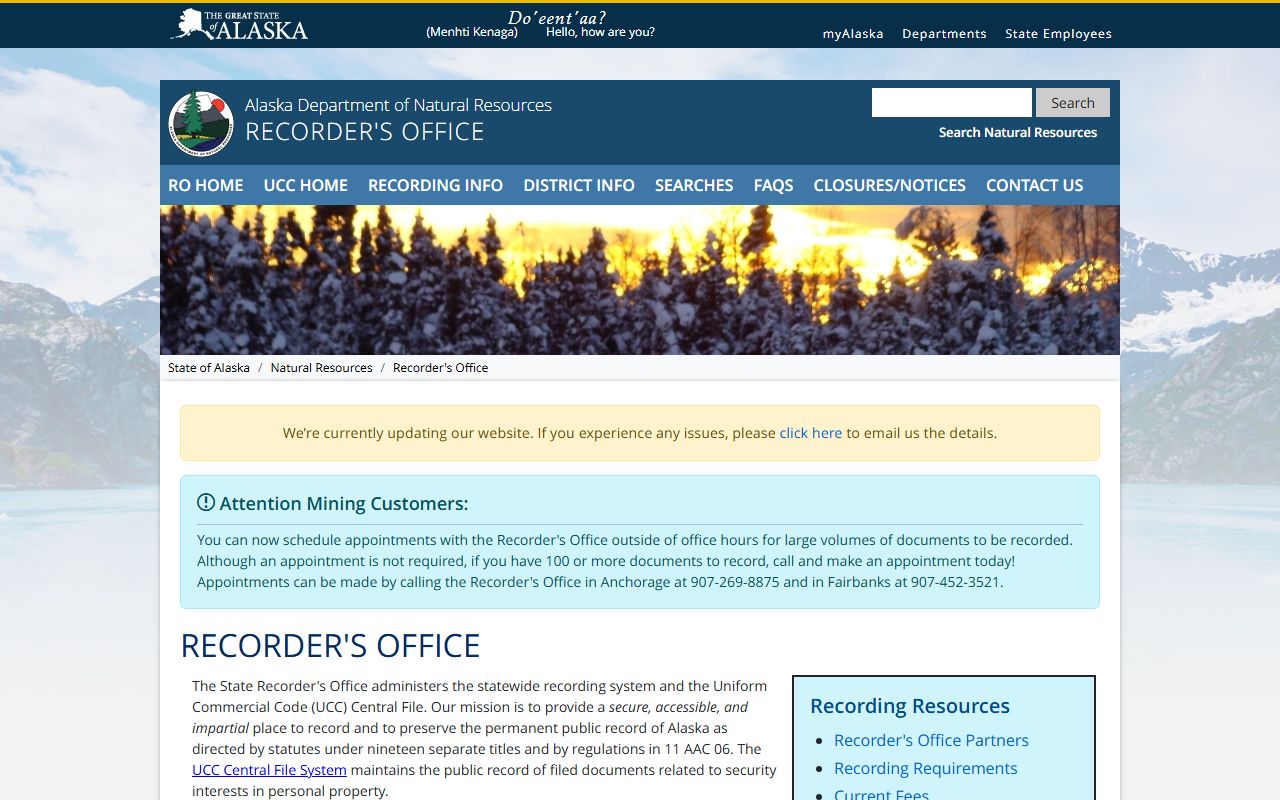
The Alaska Recorder's Office processes roughly 1,000 documents per day across its 34 recording districts, making it one of the most active land record systems in the state.
How State Assessors Handle Unorganized Areas
Even though no local property tax is levied in the unincorporated portions of the Hoonah-Angoon Census Area, the Office of the State Assessor still estimates property values for the area. This is required because the Full Value Determination affects school funding. Under AS 14.17, school districts must make a local contribution equivalent to at least a 2.65-mill levy on the full and true value of all taxable property in the district. For areas without a local assessor, the State Assessor uses valuation models to estimate the FVD. That estimate feeds into the state's education funding formula, so it matters even when no one is writing a local tax bill.
This means the state has data on assessed property values in the Hoonah-Angoon area, even without a local tax. If you need that data for research purposes, the annual Alaska Taxable report published by the Office of the State Assessor is the best source. The report is a public document and is available through the state commerce department website. It covers Full Value Determinations for every jurisdiction in Alaska, including unorganized areas.
Property is assessed at 100% of full and true market value under AS 29.45.110. Even state estimates follow that standard. The goal is to ensure that school funding calculations are based on realistic property values, not artificially low ones.
Note: The Full Value Determination for unorganized areas like Hoonah-Angoon is estimated by the state assessor using valuation models, since no local assessor exists to report actual assessed values.What to Do If You Have Property Tax Questions
If you own property in the Hoonah-Angoon Census Area and have a specific question about whether you owe property taxes, the fastest route is to call the Alaska Office of the State Assessor at (907) 269-4501. Staff there can tell you whether your parcel falls within any taxing jurisdiction and who the local contact is if one exists.
If your question is about a recorded document, deed, or lien, start with the recorder's search portal. The Recorder's Office search tool lets you look up any recorded document tied to a parcel in Southeast Alaska. You do not need an account or a fee to search. Copies of documents do carry a small fee, but basic searches are free.
For questions about whether a specific city within the census area levies a property tax, use the state tax jurisdictions contact list. That list is more reliable than calling city offices directly, since small second class cities in rural Alaska sometimes have limited office hours or staff availability.
The Property Assessments in Alaska page from the state also answers common questions about how property is valued, what rights you have during a valuation, and how the appeal process works. It is written for property owners and uses plain language.
Nearby Organized Boroughs
The areas closest to the Hoonah-Angoon Census Area that do have organized borough governments and active property tax programs include Juneau and Haines. Both have their own assessing offices and follow the standard Alaska property tax process.
Juneau City and Borough is the state capital and the largest organized municipality in Southeast Alaska. It has an online property search portal and a full in-house assessing department. Haines Borough is a smaller organized borough in Southeast Alaska that uses a contract assessor and follows state-standard assessment procedures.