
Prince of Wales-Hyder Census Area Property Tax Records
Prince of Wales-Hyder Census Area property tax records are a limited topic because this is an unorganized area of Alaska with no borough government and therefore no areawide property tax. Most land in this census area is not subject to a local property tax at all. However, certain incorporated cities within the area, most notably Craig, do levy their own property taxes on parcels within city limits. Understanding how this works, which state resources apply, and how to access deed and ownership records is the main purpose of this guide.
Prince of Wales-Hyder Census Area at a Glance
Why Prince of Wales-Hyder Has No Borough Property Tax
Alaska's system of local government is unlike any other state. The state is divided into organized boroughs and unorganized areas. Organized boroughs have elected governing bodies, defined boundaries, and the authority to levy taxes. Unorganized areas, by contrast, have no local government at the borough level and therefore have no authority to impose a property tax. Prince of Wales-Hyder Census Area is one of these unorganized areas. The census area designation is a statistical boundary used by the U.S. Census Bureau, not a government with taxing power.
This distinction is spelled out in Alaska law. The Alaska Department of Commerce, Community, and Economic Development notes clearly that the unincorporated areas of Alaska do not have the legal authority to levy a property tax. Property outside city limits in the Prince of Wales-Hyder Census Area is simply not subject to a local property tax. There is no bill to pay, no assessment to appeal, and no assessing office to contact for unincorporated land in this area.
This does not mean the land has no value or that nothing is recorded about it. Deed records, ownership documents, plat maps, and other instruments are still recorded at the state level through the Alaska Department of Natural Resources Recorder's Office. Ownership, liens, and encumbrances are all tracked in the state recording system even when no local property tax exists.
Note: Just because land is not taxed does not mean ownership records are unavailable. The DNR Recorder's Office maintains public records for all real property transactions in Alaska, including those in unorganized areas.
Property Tax in the City of Craig
The City of Craig is the largest community in the Prince of Wales-Hyder Census Area and one of the few places in this area where a property tax applies. Craig is an incorporated city with its own governing authority, and it has chosen to levy a property tax on property within city limits. Under Alaska law, incorporated cities outside of organized boroughs may levy their own property taxes as allowed by AS 29.45.550.
Craig uses a contract assessor for its assessment work. Alaska CAMA handles the assessments under contract, reachable at (907) 826-3275. If you own property within the City of Craig limits and have questions about your assessed value, your tax bill, or whether you qualify for an exemption, this is the contact to start with. The contract assessor can tell you when assessment notices go out, when tax payments are due, and how to file an appeal if you disagree with a value.
For a complete and up-to-date listing of all taxing jurisdictions in Southeast Alaska including the City of Craig, check the Alaska Office of the State Assessor Directory of Taxing Jurisdictions. This directory shows current assessor contact details for every city and borough in the state that levies a property tax.
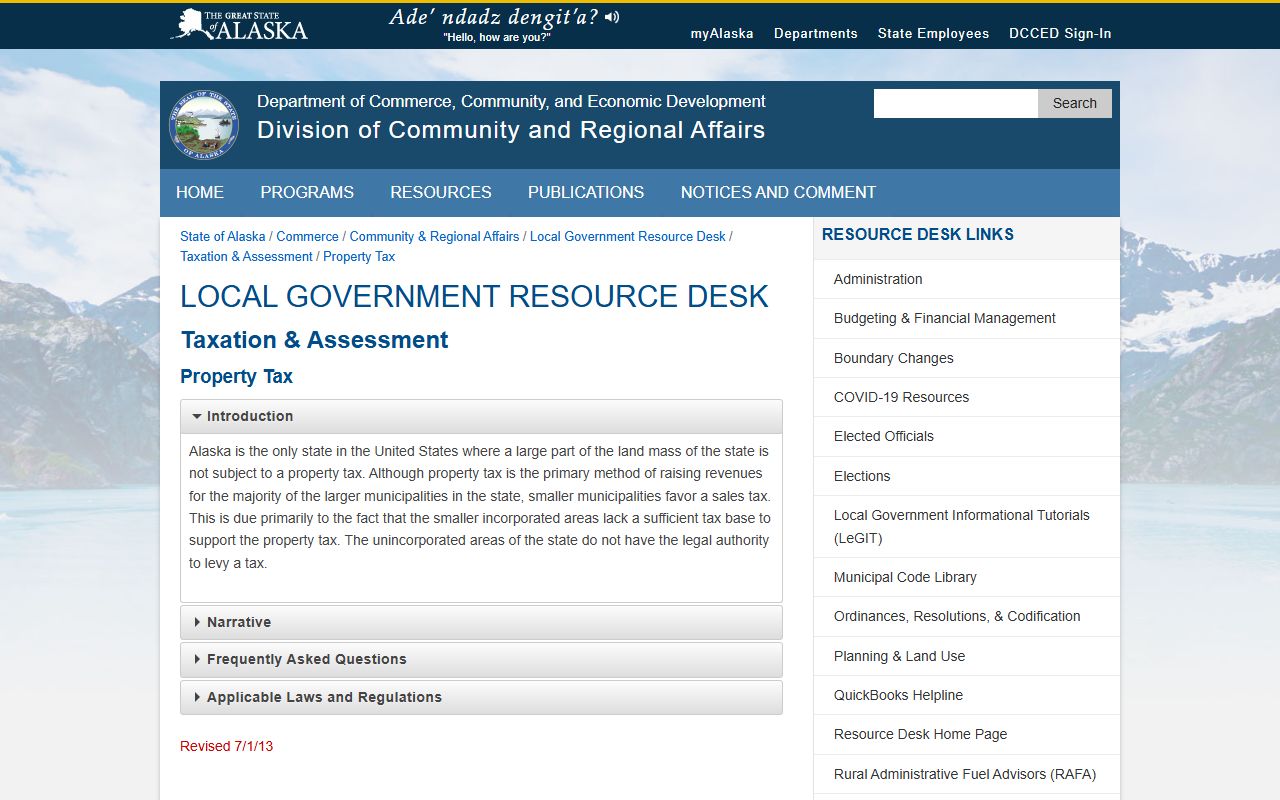
The state commerce department's property tax overview page is the primary legal and practical resource for property owners in any Alaska jurisdiction, organized or not.
Other Communities in Prince of Wales-Hyder
Several other communities exist in the Prince of Wales-Hyder Census Area beyond Craig, including Klawock, Thorne Bay, Hydaburg, and Coffman Cove. Not all of them levy a property tax. Under Alaska law, only certain cities that have adopted a property tax ordinance and meet the requirements of AS 29.45.550 can levy a tax. Smaller second-class cities may have limited taxing powers under AS 29.45.590.
For any specific community in the census area, the most reliable way to find out whether a property tax applies is to check the state taxing jurisdictions directory. If a city is listed there, it levies a property tax. If it is not listed, its residents are not subject to a local property tax.
Klawock, for example, is an incorporated city in this census area. Whether it currently levies a property tax can be confirmed through the state directory. The same applies to Thorne Bay and Hydaburg. The directory is updated regularly and is the most current source for this information. Local city offices can also confirm tax status and direct you to the right contact for assessment questions.
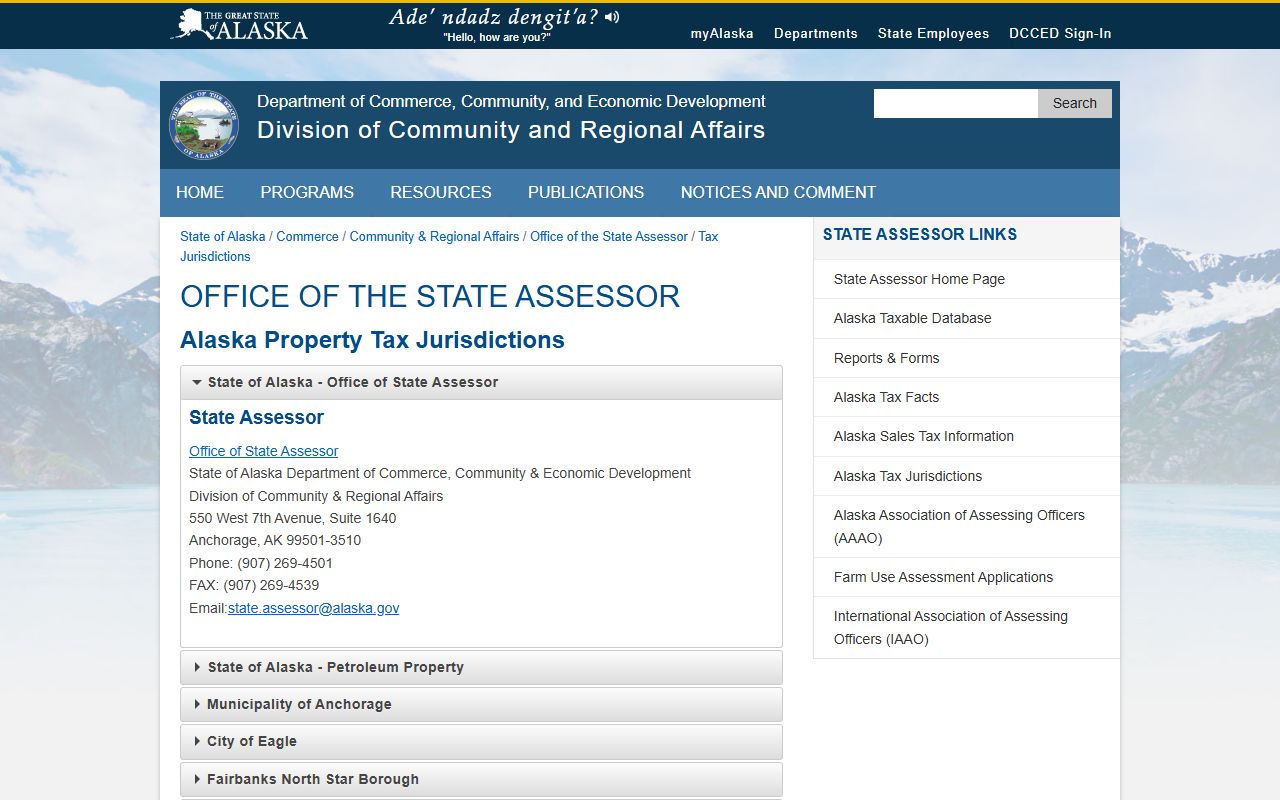
The state tax jurisdictions contact list shows every taxing city and borough in Alaska and is the definitive reference for finding out which communities levy a property tax.
How Property Is Assessed in Taxing Cities of This Area
For cities within Prince of Wales-Hyder that do levy a property tax, the same statewide rules apply. All taxable property must be assessed at its full and true value as of January 1 each year, as required by AS 29.45.110. Full and true value is the price the property would bring in an open market sale between a willing buyer and a willing seller, both aware of current market conditions. This is not what you paid for the property or what your neighbor says it is worth. It is the assessor's professional estimate based on available data.
Contract assessors serving these small cities use mass appraisal methods adapted for communities with limited market activity. In Southeast Alaska, sales data can be thin, especially on Prince of Wales Island where the market is smaller and properties change hands less frequently than in larger communities. When comparable sales are not available, the cost approach becomes the primary tool. The assessor estimates what it would cost to build the structure new, then applies depreciation adjustments for age and condition, and adds land value separately.
The assessor has the right to inspect properties under AS 29.45.130. Inspections happen at reasonable times during the day. You are not required to allow entry, but refusing access means the assessor works with exterior data only. If their estimate of interior features is wrong, you can correct it during the appeal period after receiving your assessment notice.
Once the assessment roll is complete, the city mails assessment notices to all property owners. That notice starts your 30-day appeal window. If you believe the value is wrong, act quickly. The 30-day deadline under AS 29.45.190 is firm, and missing it means you cannot appeal for that tax year.
Exemptions That Apply in Prince of Wales-Hyder Census Area Cities
In any city within this census area that levies a property tax, mandatory exemptions apply by state law. These include exemptions for property owned by governments, nonprofit organizations using property for religious, charitable, hospital, educational, or cemetery purposes, and primary residences of senior citizens aged 65 or older. Disabled veterans with a 50% or higher service-connected disability rating also qualify for a mandatory exemption on their primary home. These exemptions cover up to $150,000 of assessed value and must be applied for annually by January 15 of each year.
Optional exemptions depend on what the city council has adopted by ordinance. Common options include exemptions for personal property and a homestead exemption of up to $75,000 on a primary residence. Business personal property must be declared each year, and on-time filers can claim a $25,000 exemption under AS 29.45.050. Contact the city assessor or the state taxing jurisdictions directory to find out what optional programs are currently in place in Craig or any other taxing city in the area.
Property owned by ANCSA Native corporations is exempt in most cases unless it is leased or developed for private commercial use. Prince of Wales Island has a significant ANCSA presence through corporations including Shaan Seet, Haida, and Klawock Heenya. If there is uncertainty about whether a specific parcel owned by an ANCSA entity is taxable, the state Office of the State Assessor can provide guidance.
Accessing Property Records in Prince of Wales-Hyder Census Area
Even in unorganized areas with no property tax, real property records still exist at the state level. All deeds, mortgages, easements, plats, and other instruments affecting real property in the Prince of Wales-Hyder Census Area are recorded with the Alaska Department of Natural Resources Recorder's Office. Properties in this area fall within the Ketchikan Recording District. You can search the online index for documents recorded since 1970 using the DNR recorder's search portal.
The search system allows lookups by name, document type, date range, and other criteria. Documents are available as digital images going back to 1970. For records older than that, the Recorder's Office has historic books available at its Anchorage and Fairbanks offices. If you need a certified copy of a deed or other recorded instrument for a property in the Prince of Wales-Hyder area, the Recorder's Office is the place to request it.
The Anchorage Recorder's Office can be reached at (907) 269-8875. The Fairbanks office is at (907) 452-3521. Both offices can help you understand how to use the public search terminals and how to interpret what you find in the index. The Recorder's Office processes roughly 1,000 documents per day statewide, and all of those records are publicly available.
For property owners buying or selling land in the Prince of Wales-Hyder Census Area, checking recorded liens, easements, and deed history through the DNR system is an important step in any transaction. Even without a local property tax, the ownership record matters for title purposes.
State-Level Property Tax Resources
Several state resources are useful for property owners and researchers interested in the Prince of Wales-Hyder Census Area. The main Alaska property tax overview page from the Department of Commerce explains the entire framework, including which types of entities can tax, what the caps are, and what rights property owners have. It is the most comprehensive single source for understanding how Alaska's decentralized property tax system works.
The Directory of Taxing Jurisdictions is essential for anyone trying to figure out whether a specific city in this census area levies a property tax and who to contact. The directory is maintained by the Office of the State Assessor and updated regularly. It includes assessor names, phone numbers, and addresses for every taxing jurisdiction in Alaska.
The Alaska Taxable annual report, released each January, provides historical assessed value and mill rate data for every taxing jurisdiction, including smaller cities in Southeast Alaska. This report is available for free download from the Office of the State Assessor website. If you want to understand how tax rates in Craig or another city here have changed over time, this is where to look.
Note: The state Office of the State Assessor is also responsible for estimating full and true values for municipalities that do not levy a property tax, including the unincorporated portions of the Prince of Wales-Hyder Census Area. These estimates affect school funding calculations even when no tax is collected.
Nearby Southeast Alaska Jurisdictions
The census area borders several organized boroughs in Southeast Alaska where property tax is actively levied and assessed. Use the links below to find property tax information for neighboring areas.