
Southeast Fairbanks Property Tax Records
Property tax records for the Southeast Fairbanks Census Area are limited because this region is an unorganized area of Alaska without a borough government. Most land here is not subject to local property tax. This page explains how unorganized census areas work under Alaska law, what state resources apply to property owners in the Southeast Fairbanks area, and where to access property records that do exist.
Southeast Fairbanks Census Area at a Glance
Southeast Fairbanks Census Area Property Tax Status
The Southeast Fairbanks Census Area is part of Alaska's Unorganized Borough, which is a unique feature of Alaska's governmental structure. Unlike states where all land falls under a county government, Alaska has large stretches of territory that are not part of any organized borough. The Southeast Fairbanks Census Area is one of these unorganized regions. It covers a broad swath of Interior Alaska east of Fairbanks North Star Borough, including communities like Delta Junction, Tok, and Northway.
Under AS 29.45.010, only municipalities, meaning organized boroughs and incorporated cities, have the legal authority to levy a property tax. Unincorporated areas of Alaska have no such authority. Because the Southeast Fairbanks Census Area has no organized borough government, there is no local entity that can levy a property tax on most land within it. This is not a matter of local policy; it is a restriction written directly into state law.
This means that for most property owners in the Southeast Fairbanks Census Area, there are no local property tax records to look up. No assessment roll, no tax bill, no Board of Equalization. The land is simply not subject to a local property levy. That said, property ownership records still exist through the state recording system, and some communities within or near the area do have their own tax structures.
Property owned by Alaska Native Claims Settlement Act (ANCSA) Native corporations is exempt from municipal property tax under AS 29.45.030 unless the property is leased or developed for private use. This exemption is especially relevant in rural areas like the Southeast Fairbanks Census Area, where Native corporation land holdings are significant.
State Property Tax Resources for Southeast Fairbanks
Even without a local property tax, state resources are the primary tool for property owners in the Southeast Fairbanks Census Area. The Alaska Department of Commerce, Community, and Economic Development maintains a full property tax resource page that explains how taxation works across all organized and unorganized parts of the state. This is where to start if you have general questions about property tax authority in Alaska.
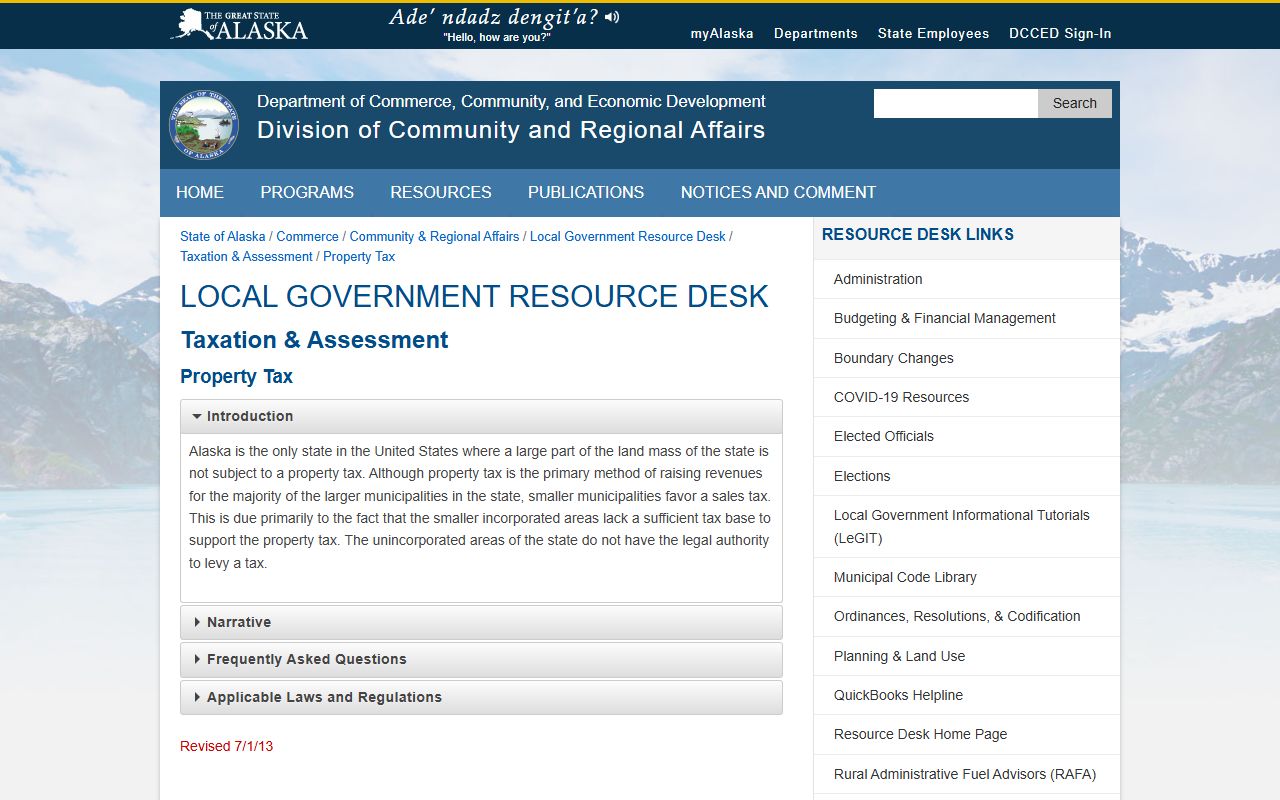
The state property tax overview covers the legal framework, frequently asked questions about taxability, and how the relationship between the state and local municipalities works when it comes to levying and collecting property taxes.
The Office of the State Assessor publishes the Tax Jurisdictions Contact List, which identifies every organized taxing jurisdiction in Alaska. The Southeast Fairbanks Census Area does not appear on that list as a taxing jurisdiction because it has no organized government. However, the list is useful for finding contact details for nearby organized boroughs that may serve parts of the region or handle questions from residents in unorganized areas.
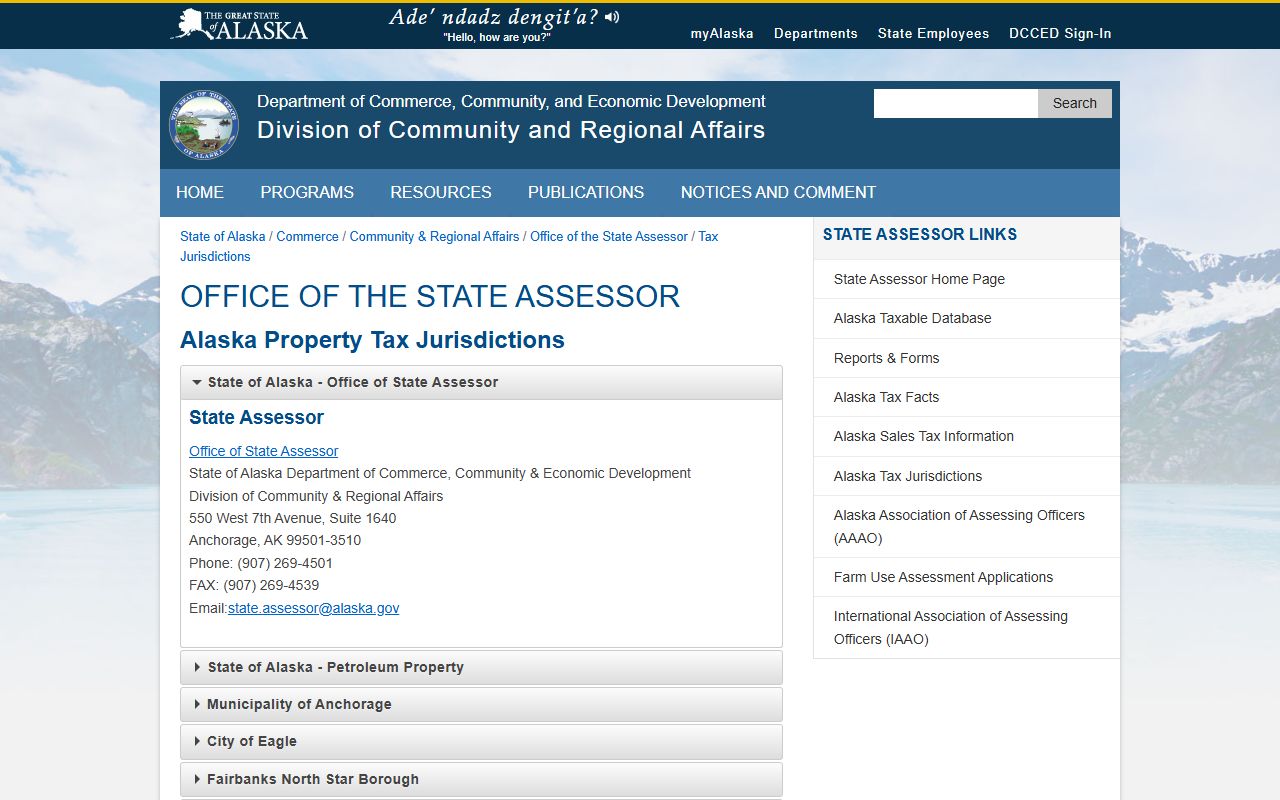
The contact list is updated regularly by the state assessor and shows which boroughs and cities currently levy property taxes, along with assessor names and phone numbers for each jurisdiction.
State Assessor Dan Nelson is the main contact for statewide property tax questions. His office is at 550 West 7th Avenue, Suite 1640, Anchorage, AK 99501, and can be reached at (907) 269-4501. For questions specific to whether a particular parcel in the Southeast Fairbanks area is subject to any tax, the state assessor's office can provide guidance.
Note: Alaska's Office of the State Assessor estimates Full Value Determinations for census areas without local assessors, using valuation models that apply to all taxable property whether taxed or not. This data is included in the annual Alaska Taxable report.What Property Owners in Southeast Fairbanks Can Do
If you own land in the Southeast Fairbanks Census Area and want to know your property's value or ownership status, the state recording system is the place to start. The Alaska Department of Natural Resources Recorder's Office maintains official records for all real property in the state, including unorganized areas. Deeds, plat maps, easements, mortgages, and other instruments that affect your land are recorded and publicly available through the state system.
You can search property records for the Southeast Fairbanks area through the Alaska Recorder's Office online search portal. The portal lets you look up documents by owner name, document type, date, document number, or location using the Meridian-Township-Range-Section system. Records from 1970 forward are available as digital images. Older documents are in historic books held at recorder's offices in Anchorage and Fairbanks. Given that the Southeast Fairbanks area is in Interior Alaska, the Fairbanks recorder's office at (907) 452-3521 may be the more convenient contact for in-person help.
If you are considering a purchase of land in the area, checking the recorder's system for existing liens, mortgages, or other encumbrances is an important step. The absence of a local property tax does not mean the land is free of other financial obligations. Recorded documents like deeds of trust and mechanics' liens stay with the property through ownership changes.
The Alaska DNR Recorder's Office main page explains how to request certified copies of recorded documents, what the copying fees are, and how to contact staff for help with a specific search. The recorder's office handles documents from all 34 recording districts in Alaska, including the district or districts that cover the Southeast Fairbanks region.
Incorporated Communities in the Southeast Fairbanks Area
While the census area as a whole does not levy a property tax, some individual incorporated communities within or near the Southeast Fairbanks area have their own tax authority. Incorporated cities in Alaska can levy a property tax if they choose to do so. Delta Junction is one of the larger communities in the area. Check with individual city clerks to find out whether a specific community levies a property tax and how to access any local assessment records.
For communities that do have a property tax, the process is the same as any other Alaska jurisdiction. Property is assessed at full and true value as of January 1. Assessment notices go out to property owners. Appeals go to the local Board of Equalization within 30 days of the notice. The state property tax overview explains these rights in full, and they apply equally to small incorporated cities as to large organized boroughs.
The tax jurisdictions contact list also shows which cities outside of organized boroughs currently levy a property tax. Not every city does. Some rely on sales tax or other revenue sources and have chosen not to levy a property tax even though they have the legal authority to do so.
Legal Framework for Unorganized Areas in Alaska
The restrictions on property taxation in Alaska's unorganized areas come directly from state law. AS 29.45.010 limits the authority to levy a property tax to municipalities, and unorganized census areas are not municipalities. This framework was designed when Alaska's state constitution was written in 1956 and reflects the principle that taxing powers are reserved for organized local governments that can be held accountable through elections and public budgeting.
Alaska's constitution at Article X, Section 2 dedicates taxing powers to boroughs and cities, not to the state or to undefined geographic areas. This means the Alaska Legislature cannot impose a local property tax on behalf of unorganized areas without first creating a governmental structure that could administer it. Efforts to extend borough organization into unorganized areas have been a recurring topic in Alaska politics, but many residents in these areas have voted against organization because of the tax implications.
For property owners who want to understand the full statutory picture, AS 29.45 as a whole covers the authority to levy, exemptions, assessment procedures, appeal rights, and tax collection for all organized municipalities. Reading through the key sections, even from a summary perspective, helps clarify why the rules are structured the way they are for areas like Southeast Fairbanks.
Note: ANCSA Native corporation land exemptions under AS 29.45.030 apply when a municipality later organizes around previously exempt land. Existing exemptions are not automatically extinguished by borough formation unless the new borough takes specific action by ordinance.Nearby Organized Boroughs
Property owners in the Southeast Fairbanks Census Area who need to deal with organized borough systems are most likely to interact with Fairbanks North Star Borough to the west. Denali Borough is another organized borough in the region. Both maintain their own assessing offices and property tax programs.
Fairbanks North Star Borough runs a full in-house assessment operation with an online search portal at propertysearch.fnsb.gov, assessment staff at (907) 459-1428, and a Board of Equalization for formal appeals. Denali Borough is located to the southwest and also levies a property tax on organized borough lands.